I was inspired to
create Spark, a zine targeted at girls from 15-19, because as I sat in this
class I kept thinking, "I wish I would have known this stuff when I was
younger. I wish I wasn't one of the many girls who felt they had to dumb down
to be accepted". I also felt that media that is presented to teens isn't
always as open minded as it should be. For instance, on teenvogue.com in the
careers section they only have articles about beauty and fashion careers. Don't
get me wrong. These fields can be a lot of fun and it is true that young women
are interested in them. But they should not be the only options presented.
Seventeen.com doesn't have a career section at all. Seeing that lack of content
made me want to create this zine. The content appears as general interest to
keep the reader engaged, but each story is based on research and has a reason
for being in the zine. The zine also has a presence on social media
platforms; tumblr and twitter.
The Line-Up
Personal Space- This page is based on the research by
Kit Grauer on teens and their bedrooms and how the aesthetics of play an
important role in creating their identity (Grauer, 2002).
I went there…- I reached out to a Boston University
alum to write a profile on the college and her experience there. Classic “I did
it!” story format.
Fashion Feature- Based on research on how people use
their workplace attire to manage the impressions they make on others and how
this leads to positive self-perception (Pulchette, Karl & Rust, 2006). I
also used this opportunity to relate different fields with summer jobs that are
accessible to them now.
Career Feature- Based on Sheryl Sandberg’s
bestselling book Lean-In, I wrote a tip story on how girls can lean in now.
This book is about women at work but she makes many mentions to her time in
college and as a young girl. I summarized those parts at relate to the reader. Here is the finished product.
Special Thanks To:
David Cooper-
Illustrator
Katie Schmidt- Writer
Sources
Teenagers and Their
Bedrooms
Kit Grauer
Visual Arts Research , Vol. 28, No. 2(56), Visual Culture
(2002), pp. 86-93
Summary:
My next article for the Hunter College Envoy is called "Transgender Media, Where Are You?" because I believe there is a lack of positive imagery for the transgender community. I interviewed a transgender Hunter student about their opinion of the media. Then I interviewed Kristen Lovell from the Trans in Action group of MCCNY. My research correlated with CUNY's academic Premier Search database concerning articles about transgender stigma, discrimination, and first person accounts. As Bell Hooks stated in "The Will to Change," patriarchy is a political system that insists that males are inherently dominating, superior to everything and everyone deemed weak, especially females, and endowed with the right to dominate and rule over the weak and to maintain that dominance through various forms of psychological terrorism and violence. We must envision alternatives to patriarchal masculinity. My research showed that men who have feminine characteristics face more discrimination than women who have masculine traits. This sexism is rampant in heteronormative situations as well as non-binary situations. Overall, the transgender studies field is growing steadily and there is a need for more awareness and societal change in the way we all view those who do not conform to the binary system.
Transgender Media, Where Are You?
A look at who we don't see on TV
by Bruce Le
The character, “Unique,” played by Alex Newell, is a recurring transgender character on the television show Glee. “Glee Introduces Its First Transgender Character” was the title of an article on GLAAD.org featuring Newell's portrayal of an African American teenager who was born biologically a boy but identifies as a girl. Unique has not been kicked off of the show yet, so it is safe to say that viewers and ratings are favorable when presented with the visible image of a transgender woman of color. But what about depictions of transgender men? And why don't viewers get to see more characters like “Unique” in the mainstream media? Unique
“Transgender men are a lot less visible, which means people joke about us less, but it also means we don't see ourselves portrayed much,” said Marty Avedon, a transgender male junior at Hunter majoring in media studies. “A lot of my friends are fans of the show Elementary because the cast is more representative of the world they live in than a lot of TV shows, and they were very excited when one of the new main characters was revealed to be a trans woman. But a lot of media is pretty exploitative, or trans women are treated as punchlines,” Avedon said.
The Merriam Webster dictionary website defines the word 'transgender' to mean “a person who identifies with or expresses a gender identity that differs from the one which corresponds to the person's sex at birth.”
According to the gender justice website, “Ellipsesproject.org,” the way to refer to all non-cisgender (cisgender is a person who identifies with the gender they were assigned at birth) gender identities would be to use the word “trans*” with an asterisk. Trans* would refer to all identities within the gender identity spectrum including transgender, transsexual, transvestite, genderqueer, genderfluid, non-binary, genderfuck, genderless, agender, non-gendered, third gender, two-spirit, bigender, and transgender men and transgender women.
Avedon is going through transitioning, which broadly means starting to live as the gender that you are rather than what you were assigned at birth. “Medical transition is what people usually think of as transitioning. That involves hormones or surgery, depending on how someone feels about their body and what they can do about it. Social transition is about changing your name, using different pronouns, and so on,” said Avedon.
Avedon believes a lot can be done to help the representation of trans* people. “Men who are transgender are treated badly, but our society is even more harsh on trans women, because of misogyny. In terms of helping visibility for trans* people, hiring trans* actors when we are being portrayed would be very helpful, as well as having trans* writers writing scripts about us, and just listening to what we have to say, instead of a doctor or academic who is not trans* but has theories about us,” Avedon said.
One example of improving visibility in the way Avedon described is a documentary on Youtube called “Trans in Media.” It was made with the help of Kristen Lovell, the facilitator of the Trans in Action program at the Metropolitan Community Church of New York for six years. “There were stories of trans women being villains, tragic stories, or one of us being murdered and the secrets we harbored that led to the murder. There was also a skit on SNL that really infuriated me,” Lovell said in an interview with the Envoy. The skit she refers to is the parody commercial SNL produced for a product called “Estromaxx.” GLAAD issued this statement about it: “The attempted comedy of the skit hinges solely on degrading the lives and experiences of transgender women.” Lovell points to the daytime talk shows of Maury Povich and Jerry Springer who create a circus of outing a trans person's identity and how those are all examples of misrepresentation. A young trans girl in “Trans in Media” was faced toward the camera and talked about how there needs to be a space created for trans women to not have to feel like they need to act like fools on Springer.
Avedon had a space where he was able to not feel so alone. He spoke highly about the Hunter College queer community enabling him to feel comfortable about being trans*. “However, most of the out trans* people I know at Hunter are men. I think trans* women don't feel safe enough on campus to be out. People can be very harsh about others they see presenting as feminine, especially if that person is perceived to be a man,” Avedon said. The stereotypes of transgender women are something that Avedon's friends have to deal with whenever presenting themselves as their preferred gender in public. Avedon said, “I had one friend who was held by the police because they stopped and frisked her for condoms. They said she was 'working,' like a prostitute.”
Lovell hears similar stories when discussing issues at Trans in Action, which serves transgender runaway and homeless youth. She empowers young people by giving them a sense of knowledge and educating them about trans history, engaging them in issues that the trans community suffers from. Previous Trans In Action meetings have discussed issues such as “LGBT rights, activism, queer history, trans history, sex and relationships.”
Recent reports of transgender women show a trend of discrimination in America and across the Atlantic.
On March 19, 2013, a transgender schoolteacher named Lucy Meadows was found dead in her apartment in Lancashire, United Kingdom, according to the Huffington Post. The Post said it was believed that Meadows committed suicide after a column had been written about her and the “negative effects a transgender teacher might have on students.” The director of TransMedia Watch told The Guardian, a British newspaper, “We know that Lucy suffered a huge amount of harassment by the press.” The result was a petition calling on the resignation of Richard Littlejohn, the writer of the article in question. Meadows
In April, another report came from Salmon, Idaho, when a transgender woman was banned from a grocery store for a year because she used the women's restroom. Lewiston Police Captain Roger Lanier told NBC news, “Society has yet to define exactly what makes a transgender. Far be it for a police department in Idaho to try to define that,” he said. The Merriam Webster dictionary website defines the word 'transgender' to mean “a person who identifies with or expresses a gender identity that differs from the one which corresponds to the person's sex at birth.”
The homeless teens that come to Lovell know all too well the reality of not fitting into patriarchal standards of masculinity and femininity. “People do not accept the youth for who they are. Their families don't want to deal with them and toss them into the street,” Lovell said.
At Trans in Action, there are continuing signs of hope to empower the youth. On May 9, Lovell will be presenting a gallery exhibition of transgender art at the second floor of MCCNY. The donations from this event will enable Trans in Action members to attend the next Trans Health Conference in Philadelphia. Lovell says she creates events like this so that Trans in Action can give youth “a sense of who they are and when they are older, they are prepared for the world.” MCCNY
Recently, there have been people speaking out on behalf of transwomen and transmen. “Feminine boys are seen as more disturbing to adults than are masculine girls,” said trans activist Julia Serano in an article on Masslive.com. Fans of Serano's work have pointed out how the gender binary and heterosexual double standards prevalent in American society extends deeper than most people realize. An Amazon review of her book, Whipping Boy, said that trans women give up male privilege for femininity and this can threaten patriarchy. “Masculine characteristics are superior to feminine characteristics in both genders. Many women buy into this concept as well,” wrote David Parker, a reviewer from Colfax. Not only do transwomen face transphobia, they also deal with this situation of discrimination for possessing female qualities which Serano describes as “transmisogyny.”
Serano
For Avedon, taking classes at Hunter and interning with a queer media company that represents queer artists are steps toward a desirable career. “I like doing work that increases queer visibility and helps the community. I would love to work with youth at a nonprofit in the future,” Avedon said. Avedon is also going through a transition by doing things like changing the gender on his ID cards, but he doesn't expect to put the experience behind him any time soon. “What I've been through is a big part of who I am. I don't want to be the same as a cisgender man. I'm doing this to be me,” Avedon said.
The people that are seen on television have not been reflecting the diverse range of gender identities and minorities that have been present from the beginning. Avedon, Lovell, and all of the trans* individuals in society continue with their lives despite this and the media world can only pretend to catch up.
Works Cited
Serano, Julia. Whipping Girl. Seal Press, 2009. Print.
Bockting W., Miner M., Romine R., Hamilton A., Coleman E. Stigma, Mental Health, and Resilience in an Online Sample of the US Transgender Population. American Journal of Public Health [serial online]. May 2013; 103 (5):31-e9. Available from: Academic Search Complete, Ipswich, MA. Accessed May 1, 2013.
Hooks, Bell. The Will to Change. New York: Atria. 2004. Print.
In a retrospective look at this semester, the thing that continues to stand out is the theme of voyeurism. When I look to the Media, I am expected to take some pleasure from the images. According to Laura Mulvey, that is scopophilia. According to John Berger, that appraisal is simply an internalisation of the male gaze. According to bell hooks, it should be a critical spectatorship. The point is that you have to look. You are forced to interpret, engage and absorb the media constantly. I am my voice, and my medium is the internet. That's what I have learnt. I am a bit of an enigma, even to myself, so the current social media landscape takes away the only thing that truly defines me - my diction. Words are a jumbled mess online. They don't translate well from my heart to my brain, and like a familiar game of whispers, the message is completely distorted by the time it reaches its intended target. Language becomes incomprehensible here when each page has a minute or less to grab and hold the attention of my fair flicker generation. It's like I'm speaking but the words are escaping in the wrong language with the wrong accent, and the meanings are suddenly lost. I do have a voice in the Media though. I just had to go out there, gather the scattered little pieces, and reassemble them in one place where I could shout everything I have ever thought about my role in consuming media. I focus on four key areas that I think contribute most to my persona. My origins, my style, my gender, and my sexuality, in fact, I used Judith Butler's theory of gender performativity as a guide throughout the piece.
I am who I say I am
but am I who I say I am,
because you say I am that which I am?
Am I who I am
because you said I couldn't be
who I am going to become?
I don't know who I am
but I am not
what you know me to be;
what you think I should be
is exactly what I shan't become.
The Framework (That is, works not cited):
Butler, Judith. Gender Trouble: Feminism and the Subversion of Identity. New York: Routledge, 1990. Print.
Mulvey, Laura. “Visual Pleasure and Narrative Cinema.” Film Theory and Criticism : Introductory Readings. Eds. Leo Braudy and Marshall Cohen. New York: Oxford UP, 1999: 833-44.
hooks, bell. Black Looks: Race and Representation. Boston, MA: South End, 1992. Print.
Mirror,
Mirror Project brings awareness to all those plagued by personal insecurities
and/or lack of self-esteem.This video
will give insight to those who do not understand the damaging effects caused to
people in situations where they have been either bullied; bashed due to their sexual
orientation; racism; ridiculed for their image; health and relationship issues;
verbal, rape or sexual abuse.Many
voices are afraid to speak, the Mirror, Mirror Project is an outlet for those
voices without judgment.
Goal: self publish book – Mirror, Mirror using a compilation of personal
stories written by myself and other individuals who are facing such issues
addressed above and those who have yet to do so, as well as, those who
continue to make strides toward accepting themselves as they are.
After going back and forth and switching between ideas of what kind of form my final project should take, I have finally realized that creating a video wasn't something I would be excited about. I wanted to create a media piece that could interact with it’s audience. Therefore, I have developed a website called “Truly Yourself”.
It was inspired by the readings and many of the viewings from the class. The main goals of the website is to spread awareness about the effect of the media on our female population as well as provide information to those who are seeking advice. In the first page “Truly Yourself” introduces its visitor with the general info on how and why media portrays women in such pervasive ways. From that page it is easy to navigate to the subpages, where I located info on how to learn to love your body and change perspectives on the woman's role in the society.
Link to the page: http://trulyyourself.weebly.com/
There is also a page that consists of videos of real (non actor) girls speaking on how they dealt with their issues of the body image, social acceptance and others. On the same page any visitor can submit their own story, by uploading their videos.
The most interactive part of the website is it’s blog. I will be posting threads, on which every visitor can comment.
There is also my contact page and the page with useful links. In addition to the links of organizations I posted already, there will be several links to the final projects accomplished by the students of this class.
In order to make the website more visible within social media, I have also created a facebook page that is going to represent the website. “Truly Yourself” is already searchable by Google, Yahoo and other search engines, but all of us can contribute towards spreading the word by liking “Truly Yourself’s” facebook page and making comments in the blog.
Before I post up the final project I wanted to say that the book does have a lot of religious views that people may or may not agree with. Please be open minded when reading the book. And respectful to those of that faith.
My book is to dispel the myth about women being inferior to men in Islam. Media shows us how muslim women are oppressed and controlled by men. Even muslim men themselves believe that they are superior because of their own misunderstanding of the religion. And muslim women simply abide by men's rules because "that's the tradition". Well I say, ef the tradition, and find out for yourself what TRUE Islam really says about the binary of man and women. The book discusses social aspects, legal rights, political rights, and overall equity of the genders. I hope this is the first of many books I would like to publish. I did not go into the veil in Islam because that is a topic I want to give it's own book to and do it justice.
"Men and women are equal
(in loose usage of the term) but not identical."
There is no doubt in the limited reality of
women in the media but even then we expect to find a few female artists in
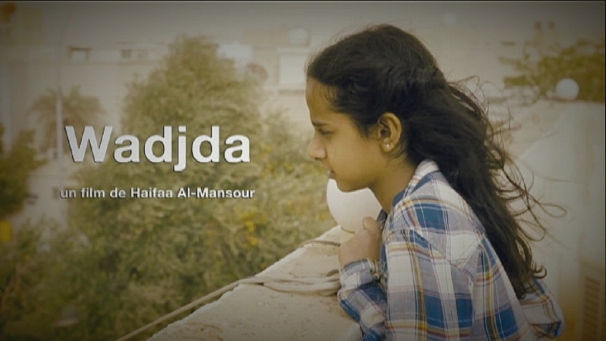
every nation out of ignorance. Haifaa-Al-Mansour is the only woman to direct a
feature film, Wadjda, in Saudi Arabia. Wadjda is about a 11 year
old girl who enters a Koran memorizing contest in the hope of using the winning
prize money to buy herself a bicycle. Similar to The Bicycle Thief, the bicycle
in Wadjda also represents freedom especially because the ban on women
riding bikes has recently been removed in Saudi. Mansour also touches upon
issues such as child marriage, polygamy, and street harrasment but Wadjda (main
character) is a revealing portrait of a modern Saudi girl (Rothman).
Wadjda is the first film to be shot entirely on
Saudi soil. For obvious reasons, Mansour had to pass many hurdles to complete
her film. After getting permission to film, her main issue was getting around
the land’s law restricting women working public. Mansour directed the entire
film from inside a van and communicated with her cast and crew via walkie-talkies.
Mansour said this just made her work harder (Rothman). Asides from the production,
exhibition was also a hassle because Saudi Arabia lacks movie theaters. Wadjda
was released on TV and DVD; it was also screened in the recent Tribeca film
festival in New York.
In 2005 Mansour released a few short films and the head
turning full length documentary, Women Without Shadows. Women without
Shadows is based on the position of women in Sadui society and their
possibilities of changing the customs and traditions. Being a Muslim exile
from Saudi Arabia, Mansour focuses her films on issues dealing with women in
her homeland. Wadjda is the little Mansour who was restricted to riding her
bike inside the house. Although Mansour came from a liberal family, the baggage
of tradition also fell upon her and through her films she is trying to make a
difference. As expected she is receiving a lot of backlash of this as well.
Common issue with women directors is getting funding for
projects. Most assumed it would be impossible for a women to make a movie on
Saudi soil but Mansour made that possible with Wadjda. Be it Women without
Shadows or Wadjda, Mansour hopes her creations will be well accepted
by her target audience. The problem here isn’t male verses female but the
similar ideas shared by both men and
women in the the Sadui society regarding the place of women. Women without
Shadows starts off by showing women fully covered in abyas with only their
eyes showing and even then those women refused to be filmed because their son
or husband of any other male member of the family don't approve of it.
In an interview, Mansour suggests than it may have been a
bit easier for her if she was to wear a hijab but she wouldn't do that because
she want to dress how she feels comfortable not how others want to see her. This
is where the concept of Author/ Auterur theory comes in. Maggie Humm discusses
how the problem with feminist literary theory and feminist film becomes the
changing of critical task from established moral values. Mansour makes sure she
keeps her moral in tact and not alter any of her values for what the public
wants see or what they are used to watching on the screen. Instead Mansour presents
her moral values on the silver screen in an attempt to change harmful social norms.


 Unique
 Meadows
 MCCNY
MCCNY Serano